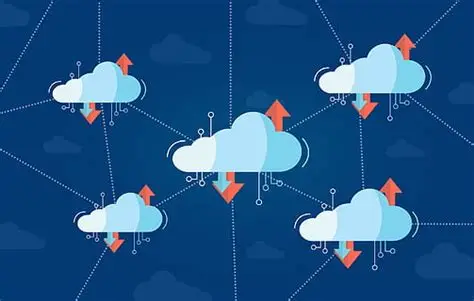
The adoption of Cloud Computing has moved beyond a technological choice to become a fundamental business necessity. However, the term “Cloud” is not monolithic; it encompasses several distinct deployment models, each offering a unique balance of control, cost, scalability, and security. Understanding the core differences between the Public Cloud, the Private Cloud, and the Hybrid Cloud is crucial for any organization charting its digital transformation journey. The decision of where to run an application—and under whose management—directly impacts long-term operational costs, regulatory compliance, and market agility.
This extensive analysis will serve as your comprehensive guide to the three major cloud deployment architectures. We will dissect the technical characteristics, economic implications, security paradigms, and ideal use cases for each model. By exploring the nuances of resource ownership, networking isolation, and operational governance, we aim to provide a clear framework for selecting the architecture best suited to a business’s specific requirements, ensuring the chosen environment supports both current efficiency and future innovation. This is the definitive explanation for demystifying the deployment layer of cloud technology.
1. The Public Cloud: The Essential Utility
The Public Cloud is the most widely adopted and fastest-growing model, characterized by shared infrastructure and on-demand access delivered over the public internet. It embodies the core philosophy of computing as a utility.
A. Core Technical Characteristics
The Public Cloud is defined by its massive scale and highly abstracted resource management.
-
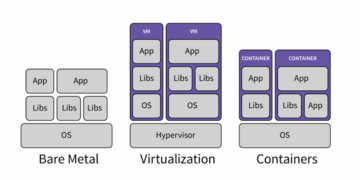
Multi-Tenancy: Resources (servers, storage, network) are shared among numerous unaffiliated customers, though logically isolated through advanced virtualization and containerization technologies. This sharing model is key to its cost efficiency.
-
On-Demand and Elasticity: Users can provision and de-provision computing resources instantly via a web interface or Application Programming Interfaces (APIs). Resources can scale outward and inward rapidly and automatically to meet fluctuating demand.
-
Global Footprint: Providers like Amazon Web Services (AWS), Microsoft Azure, and Google Cloud Platform (GCP) operate vast, interconnected networks of data centers across the globe, organized into Regions and Availability Zones (AZs), offering global reach and built-in redundancy.
B. Economic and Financial Implications
The Public Cloud fundamentally alters the financial model of IT expenditure.
-
Operational Expenditure (OpEx): The model eliminates upfront capital expenditure (CapEx). Customers pay only for the resources they consume (per second or per hour), turning IT into a variable operating expense that scales directly with business usage.
-
Lower Barrier to Entry: Startups and small businesses can access enterprise-grade infrastructure and sophisticated tools (like machine learning, global load balancing) without the massive initial investment previously required, dramatically lowering the barrier to entry for innovation.
-
Cost Optimization via Scale: Public Cloud providers achieve massive economies of scale, allowing them to offer resources at a lower cost than most individual companies could achieve by building their own data centers.
C. Security and Governance
Security in the Public Cloud is governed by the Shared Responsibility Model.
-
Provider Responsibility: The cloud provider is responsible for the security of the cloud—the physical security of the data centers, the hardware, and the global network infrastructure.
-
Customer Responsibility: The customer is responsible for the security in the cloud—managing their data, application code, network configurations (e.g., firewalls), and access control (IAM). This gives the customer flexibility but requires active management.
-
Compliance: Public Cloud platforms are certified against a massive array of global compliance standards (e.g., ISO, SOC, HIPAA, GDPR), simplifying the compliance process for customers in regulated industries.
D. Ideal Use Cases
-
Web and mobile applications with highly variable traffic (e.g., e-commerce, media streaming).
-
Development and testing environments (Dev/Test), where resources are needed quickly and often decommissioned.
-
Data analysis and machine learning workloads requiring high-performance, temporary computing power.
-
Disaster recovery and backup solutions due to the geographic redundancy of AZs.
2. The Private Cloud: Control and Isolation

The Private Cloud infrastructure is provisioned for exclusive use by a single organization. It offers the governance and control of traditional IT combined with the agility of cloud architecture.
A. Core Technical Characteristics
The Private Cloud emphasizes isolation, dedication, and deep customization.
-
Dedicated Resources: The computing resources are dedicated solely to one organization. While the underlying hardware might still use virtualization, the capacity and network are not shared with external entities.
-
Deployment Location: The infrastructure can be located on-premises (in the company’s own data center) or off-premises (hosted by a third-party vendor in a dedicated environment).
-
Control Layer: The organization retains maximum control over the entire software stack, including the operating system, middleware, hypervisor, and networking components.
B. Economic and Financial Implications
The Private Cloud model retains significant financial characteristics of traditional IT.
-
Capital Expenditure (CapEx): If deployed on-premises, it requires significant upfront capital investment for hardware, data center construction, and long-term maintenance.
-
High Operational Overhead: The organization is responsible for all operational costs, including hardware maintenance, power, cooling, patching, and lifecycle management, which demands a large, specialized internal IT staff.
-
Predictable Cost Base: The fixed nature of the hardware investment provides a more predictable monthly cost structure, which can be advantageous for organizations with highly stable, non-variable workloads.
C. Security and Governance
The Private Cloud offers the highest level of isolation and control.
-
Maximal Control: Security is fully controlled by the organization, allowing them to implement highly customized security policies, physical access controls, and networking isolation that meet specific, often proprietary, requirements.
-
Regulatory Compliance: It is the preferred choice for organizations that must comply with very strict data residency, privacy, or sovereign regulations (e.g., financial trading platforms, defense contractors, specific healthcare providers) where physical control over the data location is mandated.
-
Network Isolation: Resources can be fully isolated from the public internet, offering protection from external threats, though this also requires the organization to manage all internal network security and connectivity.
D. Ideal Use Cases
-
Highly regulated industries with strict data residency requirements (e.g., banking, government).
-
Workloads involving highly sensitive intellectual property or proprietary algorithms.
-
Large enterprises with existing, substantial investments in data center infrastructure that they wish to modernize with cloud capabilities.
-
Applications with predictable, constant high demand where the cost-benefit analysis favors fixed asset ownership over variable rental costs.
3. The Hybrid Cloud: The Best of Both Worlds
The Hybrid Cloud is an environment that combines two or more distinct cloud infrastructures (Public, Private, or Community) that remain unique entities but are bound together by proprietary or standard technology that enables data and application portability.
A. Core Technical Characteristics
The Hybrid Cloud model relies heavily on seamless integration and interoperability.
-
-
Interoperability: Requires robust connectivity, often via dedicated high-speed links (like AWS Direct Connect or Azure ExpressRoute), to enable low-latency, secure communication between the on-premises private environment and the external public cloud.
-
Management Tools: Requires unified management and orchestration tools (like Kubernetes, hybrid control planes) that allow IT administrators to monitor and manage resources running across both environments from a single console.
-
Workload Segmentation: The key feature is the strategic segmentation of workloads: placing non-sensitive, elastic workloads on the Public Cloud, while reserving sensitive, steady-state workloads for the Private Cloud.
-
B. Economic and Financial Implications
The Hybrid Cloud aims for a balance between cost optimization and control retention.
-
Cost Optimization: It allows an organization to minimize expensive CapEx investment by leveraging the Public Cloud for peak demand periods (a technique known as cloud bursting). The Private Cloud handles the baseline capacity, while the Public Cloud absorbs the overflow, providing an optimized blend of fixed and variable costs.
-
Gradual Migration: It facilitates a phased migration strategy, allowing organizations to slowly and strategically move applications to the public cloud over time without needing a risky, immediate “big bang” migration.
-
Leveraging Legacy Investment: It allows businesses to extend the useful life of existing on-premises hardware and software that cannot be immediately migrated, protecting prior investments.
C. Security and Governance
Security in a Hybrid Cloud is the most complex model, requiring comprehensive, consistent policies across disparate environments.
-
Policy Consistency: A single, unified security policy must be extended and enforced across both the private and public boundaries to prevent security gaps at the handoff points. Identity and Access Management (IAM) must be synchronized across both clouds.
-
Data Classification: Strict data classification is required. Sensitive data (e.g., PII, regulated financial data) must be clearly tagged and restricted to the Private Cloud, while general operational data can reside on the Public Cloud.
-
Network Security Management: Managing the security of the connection point (the gateway) between the two clouds is critical to prevent unauthorized access and data leakage.
D. Ideal Use Cases
-
Large enterprises seeking to modernize their IT without disrupting core legacy systems.
-
Organizations with seasonal or unpredictable peak demands that exceed their private infrastructure capacity.
-
Businesses required to keep specific customer data resident on-premises due to regulatory mandate but want to utilize public cloud tools for development, testing, or analytics.
-
Companies running complex applications where one component (e.g., the front-end web server) can be elastic and public, while another component (e.g., the core database) must remain private.
4. Comparative Analysis: Public vs Private vs Hybrid
To clarify the strategic decision-making process, a direct comparison of the three models is essential.
-
Control and Customization: Private Cloud offers the highest control over hardware and OS, allowing for deep customization. Public Cloud offers the least control over the infrastructure layer but the most over the application layer. Hybrid offers selective control, balancing compliance needs with flexibility.
-
Scalability and Elasticity: Public Cloud provides virtually unlimited, rapid elasticity. Private Cloud scalability is limited by the upfront physical hardware investment. Hybrid Cloud offers practical, cost-optimized scalability by utilizing the Public Cloud for peak demand.
-
Cost Structure: Public Cloud is OpEx (variable, pay-as-you-go). Private Cloud is primarily CapEx (fixed, upfront investment). Hybrid Cloud is a mix of both, aiming to convert peak demand CapEx into OpEx.
-
Time to Market: Public Cloud offers the fastest deployment, measured in minutes. Private Cloud is the slowest, measured in days or weeks due to hardware acquisition and configuration. Hybrid lies in the middle, depending on which environment the application is deployed into.
5. Key Decision Factors for Adoption
The optimal cloud deployment strategy depends on a few fundamental business and technical criteria.
-
Regulatory and Compliance Burden: For heavily regulated industries (e.g., finance, healthcare), Private or Hybrid solutions are often mandatory to meet data residency and sovereignty laws.
-
Workload Predictability: Workloads with highly unpredictable or spiky traffic patterns are best suited for the low cost and high scalability of the Public Cloud. Stable, high-utilization workloads may be more cost-effective on a Private deployment.
-
Data Sensitivity: Highly sensitive data (classified, proprietary algorithms) is typically best placed in the isolated environment of a Private Cloud or the protected perimeter of a Hybrid Cloud.
-
Legacy Integration: Organizations with large, complex legacy systems that cannot be easily re-platformed will find the Hybrid Cloud model necessary to connect new cloud-native applications with existing core systems.
6. The Future of Deployment: Cloud Interoperability
The clear lines between the deployment models are increasingly blurring, pointing toward a future dominated by a sophisticated, integrated Hybrid environment.
-
Multi-Cloud Strategy: Many organizations now use services from multiple Public Cloud providers (e.g., AWS for compute, Azure for identity) alongside their Private Cloud. This Multi-Cloud approach is a complex version of Hybridity, designed to maximize vendor capabilities and avoid vendor lock-in.
-
Cloud-Native Technologies: Tools like Kubernetes and Serverless Functions are designed to be run identically across any environment (on-premises, public cloud, or edge devices). These technologies create a unified operating environment, making the underlying deployment model less relevant to the developer and more portable for the business.
-
Managed Private Cloud Services: Public Cloud providers are now offering fully managed, specialized hardware to customers to run in their own data centers (e.g., AWS Outposts, Azure Stack). This allows customers to leverage the Public Cloud’s operating model (OpEx, centralized management) on their Private infrastructure, essentially bringing the Public Cloud into the private data center.
Conclusion: A Strategy, Not Just Technology

The choice between Public, Private, and Hybrid Cloud models is a critical strategic decision that aligns technology resources with core business objectives. The Public Cloud offers unmatched agility, scale, and OpEx benefits, ideal for growth and innovation. The Private Cloud provides the highest degree of control, security, and customization necessary for highly regulated workloads. The Hybrid Cloud serves as the necessary, flexible bridge, allowing organizations to maintain control over core systems while leveraging the scale and cost-efficiency of the Public Cloud for variable demand.
Ultimately, the best strategy is the one that is most optimized for the organization’s specific data sensitivity, regulatory compliance needs, and financial goals. The modern IT landscape is defined by this strategic deployment flexibility, allowing businesses to tailor their digital environment precisely to the challenges and opportunities of the global market. Strategic choice of deployment ensures future competitiveness.